


PERSIAN MINIATURES AND FRESCOES
WINE, PAINTING, AND POETRY
CHINA
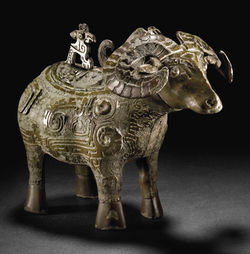
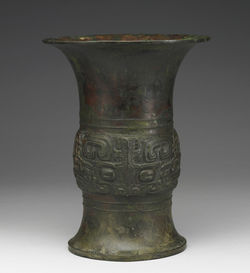
While wine is usually defined as an alcoholic drink produced through the fermentation of grapes grown on cultivated vines, this was not the case in Ancient China. From the Neolithic period (over 3000 years BC), it's known that Chinese people made an alcoholic drink from fermented cereals such as millet and wheat. This beverage was known as jiu. As no exact equivalent for this term exists, it's generally translated as wine, despite not coming from the fermentation of grape juice. This particular practice arrived later – around the 4th century BC – with the introduction of cultivated vines, Vitis vinifera, from central Asia*. The grape-based wine produced from this point onwards is also called jiu, a term used for the many sorts of wine which coexisted for centuries: cereal-, grape- and fruit-based wines together.
Among the many US, English, Chinese and French museums whose artworks linked to wine are displayed here, few indicate what type of wine is depicted. When these pieces date from before the 4th century BC, it's almost certainly cereal-based; when they're more recent than this, it's sometimes difficult to know. But really, what does it matter?
* Via the Silk Road, a network of roads and sea routes used for the transport of goods. These trading routes would dominate East-West exchanges for centuries. The oldest known traces of the Silk Road, used for communication with Western peoples, date back to “at least 2000 BC” (Lucette Boulnois, Les routes de la soie, Sciences humaines, April 2009).
The Rubaiyat of Omar Khayyam (11th century) help showcase the classical Persian miniatures and miniaturist-style frescoes presented in this exhibition. Wine, which is mentioned very often in these quatrains, appears as a cure for melancholy resulting from the passage of time and the shortness of life. “Drink and be happy” is the refrain of these epicurean verses. For Khayyam, wine is an elixir of life; “the door to joy” is the tasting of wine, the birth of spring, convivial gatherings, lovers’ dreams and gallant scenes: “The caravan of life goes by quickly. Lose nothing of the sweet moments of life. Think not to the day after this night. Take wine, for you must seize life’s sweet moments.” Or, again: “In the springtime, I sometimes go to sit on the edge of a field of flowers. When a young beauty brings me a cup of wine, I hardly think of my salvation. Should I worry about that, I would be worth less than a dog.”
Full-screen mode recommended. Visit the exhibition: click on the miniatures displayed below or follow the suggested route >>
 |  |  |
|---|---|---|
 |  |  |
 |  |  |
 |  |  |
 |  |  |
 |  |  |
 |  |  |
 |  |  |
|---|---|---|
 |  |  |
 |  |  |
 |  |  |
 |

< main exhibitions menu | suggested route >
© 2020 Le Musée Virtuel du Vin - The Virtual Wine Museum
Alcohol abuse is dangerous for your health, consume with moderation